
Warehouse Line Marking WA
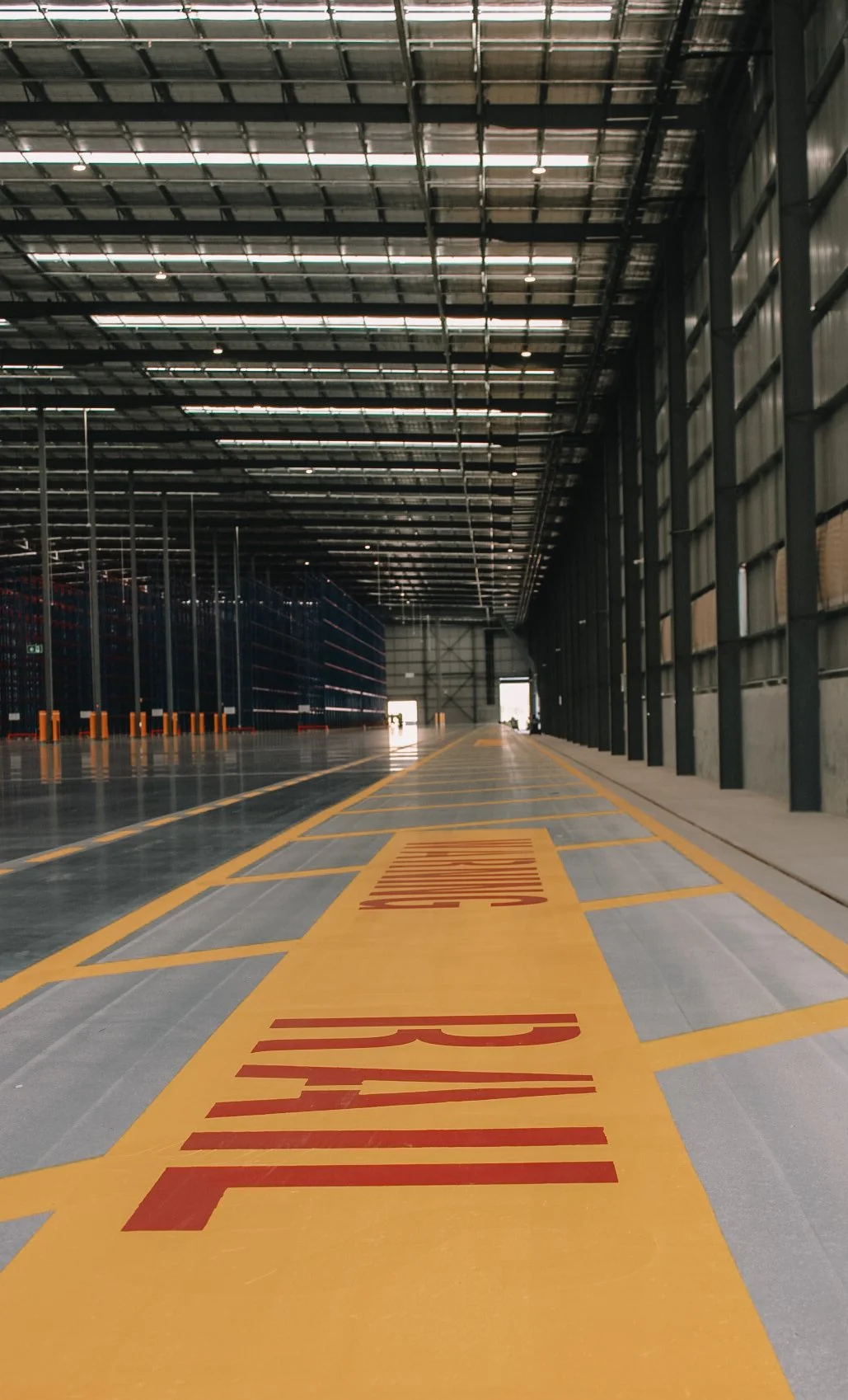
Warehouse line marking plays a much bigger role than simply keeping floors organised. In Western Australia, where logistics, mining support, manufacturing and distribution all rely heavily on efficient warehouse operations, clearly defined floor layouts are a key part of both safety and productivity.
At Line-Right, we complete warehouse line marking projects across Perth and wider Western Australia, helping businesses create safer, more efficient working environments through clear and durable floor marking systems.
This guide explains what warehouse line marking involves, why it matters, and how it is typically planned and implemented in industrial environments.
Why Warehouse Line Marking Matters
Inside a working warehouse, there is constant movement between people, forklifts, trucks and stock. Without clear visual guidance on the floor, the risk of confusion, inefficiency and accidents increases significantly.
Line marking provides structure to this environment. It creates a visual system that helps define how the space is used, guiding both pedestrians and machinery operators through the warehouse safely and efficiently.
In many Western Australian industrial facilities, proper line marking is not just about organisation. It directly supports workplace safety standards, improves workflow efficiency and helps reduce operational risk.
Common Warehouse Zones and Layouts
Most warehouse line marking systems are built around clearly defined functional zones. These zones are designed to separate different types of movement and activity within the same space.
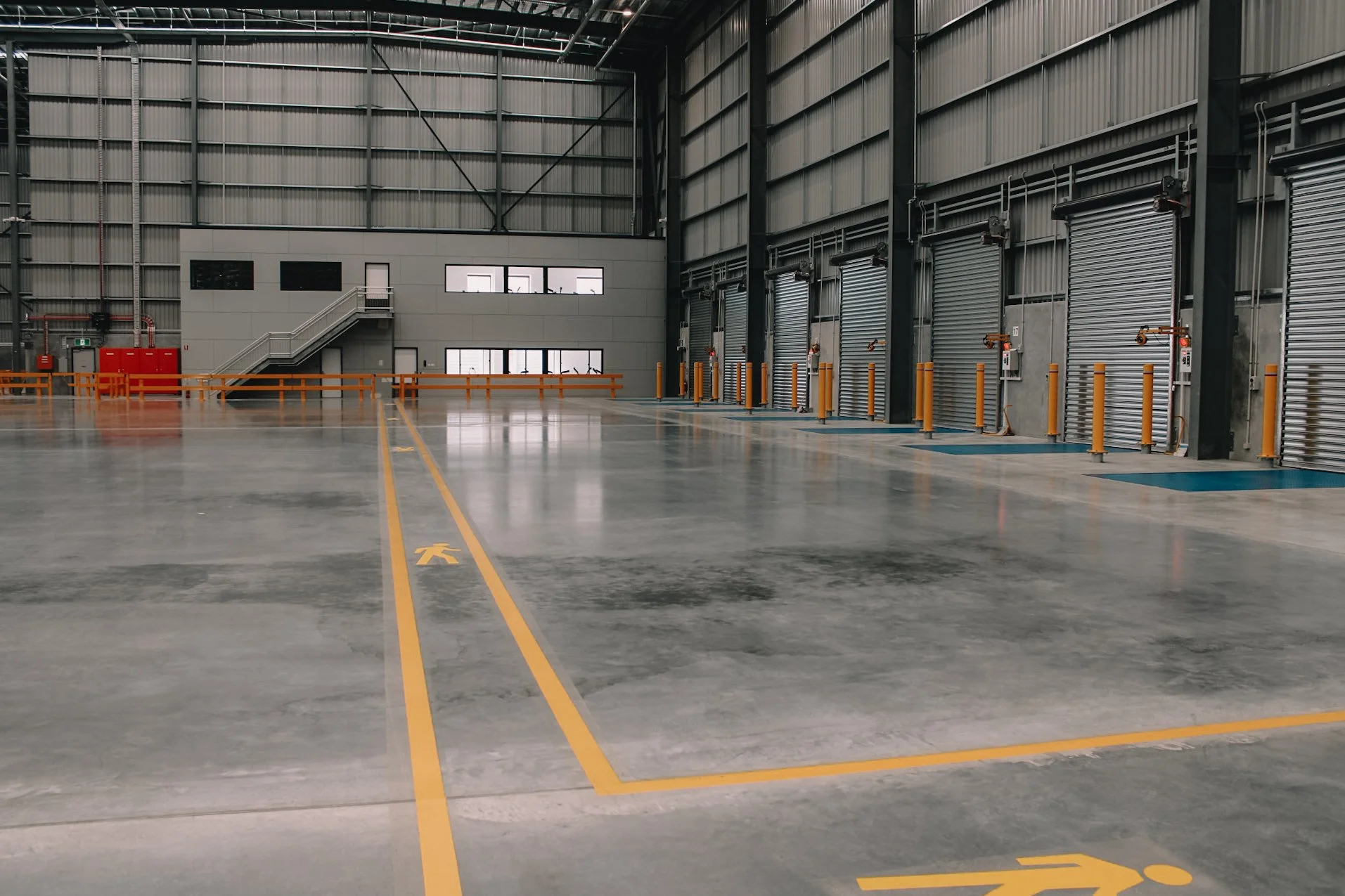
Pedestrian walkways are one of the most important elements, providing dedicated safe paths for staff to move through the warehouse without crossing into forklift or vehicle areas. These walkways are usually clearly marked and positioned to minimise interaction with machinery traffic.
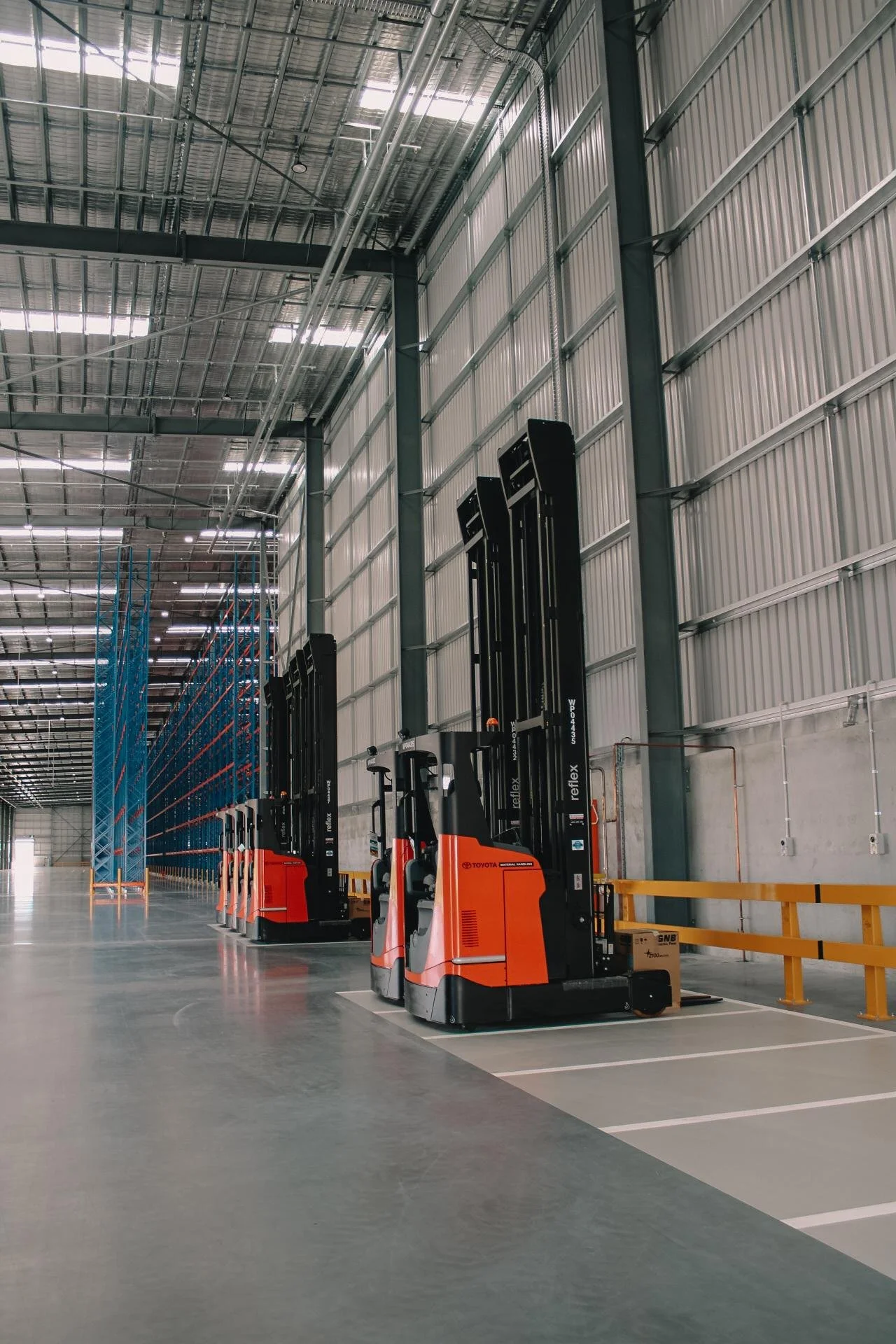
Forklift routes are another critical component. These paths are designed to guide heavy vehicle movement through the warehouse in a controlled and predictable way, reducing the chance of collisions or congestion.
Loading and unloading zones are also clearly marked to ensure that goods are handled in designated areas, improving both safety and efficiency during deliveries and dispatch operations.
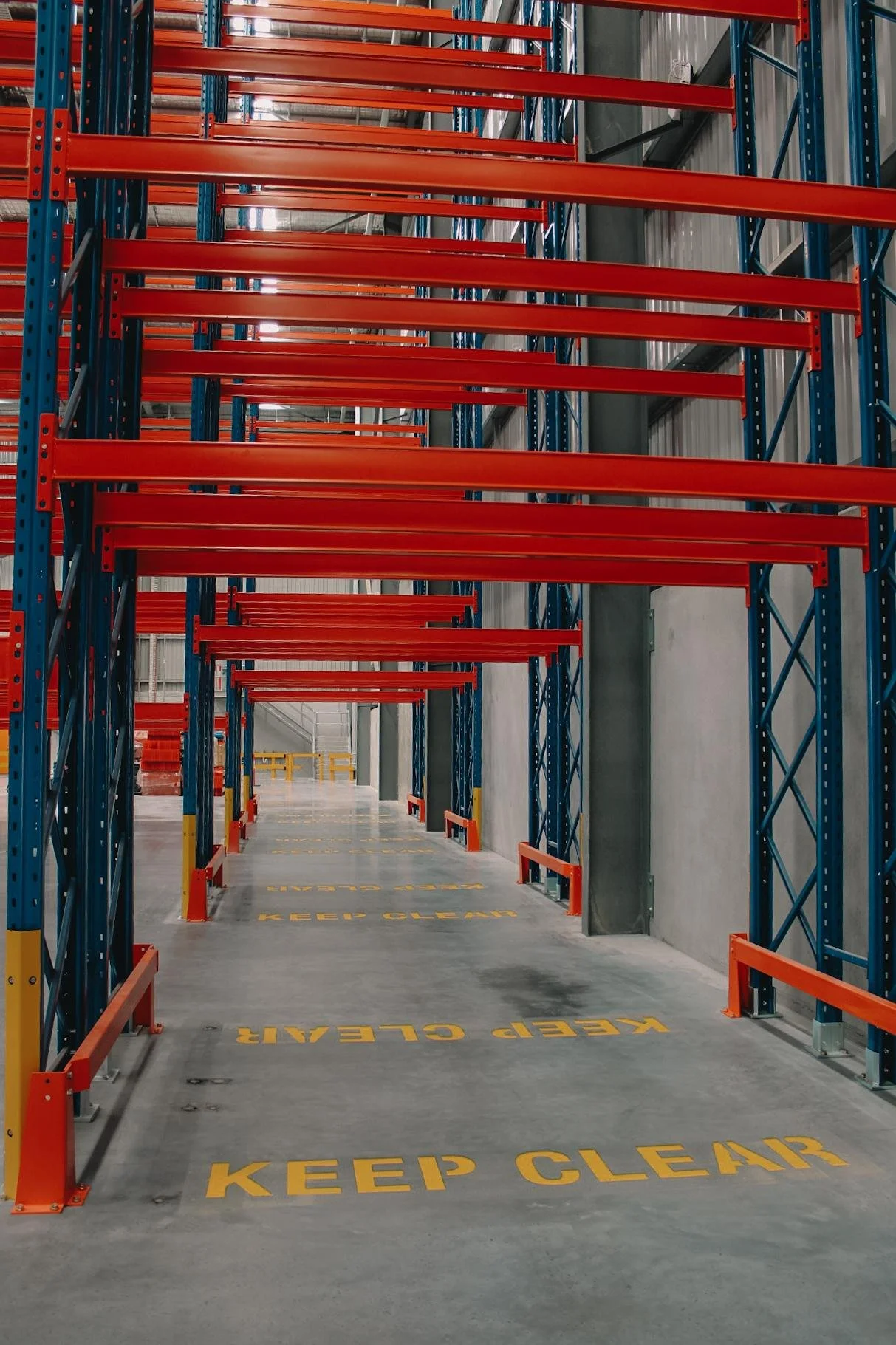
In addition to these core zones, many warehouses also include hazard areas, storage zones and restricted access areas, all of which rely on clear visual separation on the floor.
Safety and Compliance Considerations in WA
Across Western Australia, warehouse layouts are often designed with workplace safety standards in mind. While every site is different, the underlying principle remains the same: separating people from moving machinery wherever possible.
Line marking supports this by creating a visible system that reinforces safe behaviour and reduces uncertainty in high-traffic environments. When combined with appropriate signage and physical barriers where required, it becomes part of a broader safety strategy within the facility.
In busy Perth industrial areas, especially logistics hubs and distribution centres, these systems are essential for maintaining safe and efficient operations.
Materials Used in Warehouse Line Marking
The type of material used for warehouse line marking depends largely on traffic levels, surface condition and expected wear.
Standard line marking paints are commonly used in many commercial warehouse environments across Western Australia. These are suitable for general use areas and can be applied relatively quickly, making them ideal for maintenance or layout updates.
In higher traffic or more demanding environments, more durable systems such as epoxy coatings may be used. These provide stronger resistance to wear, particularly in areas with constant forklift movement or heavy pallet traffic.
The choice of material often comes down to balancing durability, cost and operational requirements.
Planning a Warehouse Layout Properly
One of the most important parts of any warehouse line marking project is the planning stage. Before any paint is applied, the layout needs to be carefully considered to ensure it actually supports how the warehouse operates.
This includes understanding how goods move through the space, where pedestrian access is required, and how machinery travels between key operational areas. A well-planned layout improves efficiency and reduces the need for future changes or corrections.
In many cases, warehouses in Perth and across Western Australia will also update their layouts over time as operations change, meaning flexibility in design is an important consideration.
Surface Preparation and Longevity
The condition of the floor surface plays a major role in how well line marking performs over time. A clean, well-prepared surface allows the material to bond properly and ensures better durability.
In contrast, surfaces that are dusty, oily or worn may require additional preparation before marking can be applied effectively. This step is important because it directly impacts how long the markings will remain visible and intact under daily warehouse traffic.
Proper preparation helps ensure that the finished result not only looks good but also performs reliably in a high-use environment.
Why Professional Installation Matters
Warehouse line marking might appear simple on the surface, but achieving an effective and long-lasting layout requires experience and attention to detail.
Accurate measurements, correct spacing, and an understanding of traffic flow all play a role in how well the system functions once in use. Poorly planned or poorly applied markings can quickly lead to confusion, inefficiency or safety risks.
Professional installation ensures that the layout is practical, compliant with safety expectations, and suited to the real-world demands of the warehouse environment.
Warehouse Line Marking in Perth and Western Australia
Across Perth and broader Western Australia, warehouse line marking is an essential part of maintaining safe and efficient industrial operations. Whether it is a new facility or an upgrade to an existing layout, clear floor marking systems help support both day-to-day operations and long-term safety.
From logistics centres to manufacturing plants and distribution hubs, well-designed line marking plays a key role in keeping people, vehicles and processes moving smoothly.
Final Thoughts
Warehouse line marking is far more than a visual upgrade. In Western Australian industrial environments, it is a practical system that supports safety, efficiency and operational clarity.
When properly planned and installed, it helps define how a warehouse functions and reduces the risks associated with high-traffic industrial movement. For businesses in Perth and across WA, investing in a well-designed layout is often one of the most effective ways to improve both safety and productivity on site.
